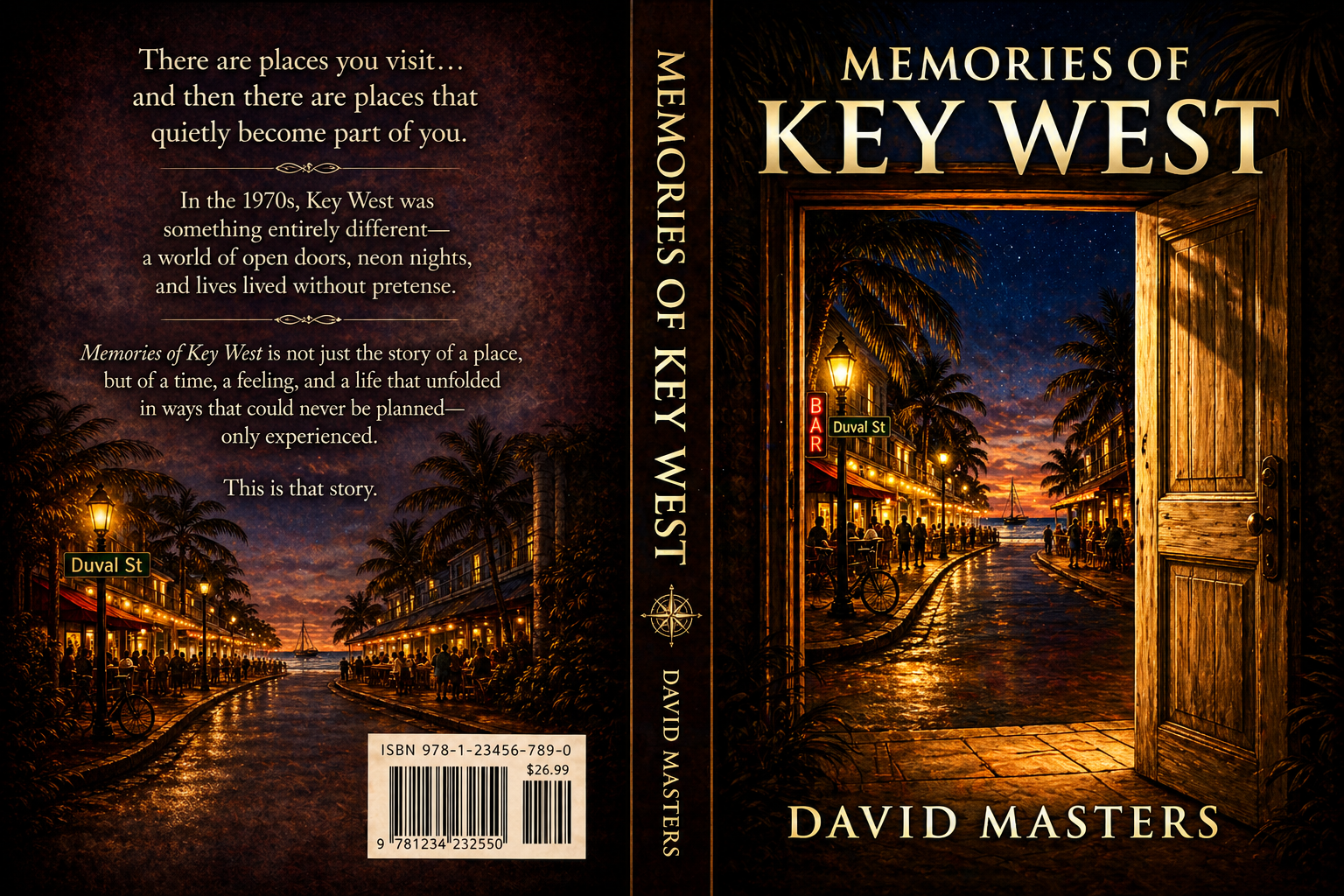
Read an Excerpt
The story begins in Kansas City, where life feels easy and full of possibility—until one quiet morning, a single question and a brand‑new Cadillac set everything in motion.
Chapter 1
The Cadillac
Some lives begin with a simple question: Which way?
At that time in my life, I lived in downtown Kansas City, Missouri. Not just lived there—I was part of it. There was a sense of belonging that didn’t come from ownership or roots, but from being there. I was there, fully there, moving with the city instead of just existing in it. I hadn’t earned it with years or family or property; it was as if simply showing up day after day, walking those streets and breathing that air, was enough to let the city claim me for a while.
When I was young—very young—I had no problem moving or doing whatever I wanted at a moment’s notice. There was no hesitation, no need to plan things out, no urge to think too far ahead. I didn’t spend much time worrying about what might happen next or whether something would work out. I just moved, and that felt like enough. If a thought came, I followed it. If a feeling tugged at me, I let it lead. It never occurred to me to stop and ask what might be lost in the choosing—I was far too busy saying yes.
The unknown didn’t frighten me. If anything, it pulled me forward. There was something about not knowing that excited me—almost magnetic in the way it called me ahead. A new adventure. New people. New places. Seeing what life had to offer before I even knew what I was looking for. I didn’t feel like I needed a map. I just needed movement, the sense that something was waiting ahead. Standing still felt more dangerous than any wrong turn; stillness meant you might start asking too many questions, and I wasn’t ready for those yet—I didn’t want an answer to questions I hadn’t even dared to ask.
Looking back now, I still can’t fully explain how everything always seemed to work out, but somehow it did. I always found a place to stay. I always managed to eat. Money came and went, sometimes faster than I expected, but it never seemed to matter much. I spent very little, yet I never felt I was without anything I truly needed. In ways I didn’t question, things just fell into place. Life had a way of taking care of itself. I trusted that it would. I walked through those days with the kind of quiet arrogance only the young can afford, assuming the safety net would be there because, so far, it always had been—like a magic trick I’d seen too many times to doubt, but never bothered to learn.
It was a kind of freedom that’s hard to understand once it’s gone. Not reckless. Not careless. Just open. Open to the next day, the next invitation, the next unexpected turn. Open to the idea that life didn’t have to be measured and managed to be good. No planners. No calendars marked months ahead. No five‑year plans taped to the refrigerator. Just a steady belief that tomorrow would rise up to meet me, whatever I decided to do—as if the universe kept a standing appointment with me and never called to cancel.
I found a job with a company that produced artwork by sandblasting images onto mirrors and glass. Even now, I can still see those pieces in my mind—the way light caught the etched surface, the contrast between the clear glass and the soft frosted image, how something ordinary could suddenly look elegant simply because of what had been placed upon it. There was something particular about that work. It had delicacy, but also precision, and it stayed with me visually in a way I didn’t appreciate at the time. I didn’t have the language then to explain why it fascinated me—that you could take something plain and, by removing just the right bit of surface, reveal an image that had been invisible all along.
I worked in the office as a bookkeeper, even though I’d never really been a bookkeeper before and had very little training. Yet there I was, doing it, and somehow it worked. No one questioned it, and I didn’t either. That was how things seemed to happen then. If something needed to be done, I did it. If a door opened, I stepped through it. I didn’t stop to ask whether I was qualified or prepared enough. I just moved into whatever life set in front of me. The numbers lined up, the ledgers balanced, and that was proof enough. Competence, in those days, felt like something you could grow into on the job, not a requirement you had to meet before you began.
My apartment was on an upper floor of a building that had once been a hotel and had been converted into apartments. It wasn’t fancy. It wasn’t meant to impress anyone. But it was comfortable, and more than that—it had a view. A view I never got tired of. The hallway still carried the echo of its hotel days—long, narrow, a little worn at the edges, with doors that felt like they’d opened onto a hundred different stories before mine.
At night, I’d sit by the window and look out over the city lights of Kansas City. They stretched out in every direction—small points of light at first, then larger clusters, then whole sections of the city glowing against the dark. Looking out over them, everything below felt alive in a quiet, distant way, as if the city were breathing on its own, separate from me, yet somehow still connected. I liked knowing that while I sat there in the dark, other people were starting their nights, ending their shifts, falling in love, making mistakes—all of it happening at once beneath that soft electric glow.
Sometimes I’d sit there a long time without moving, just watching, letting the stillness settle in around me. Those moments didn’t seem dramatic then. They were quiet, private, the kind someone else might not have noticed or remembered. But I remember them. I remember sitting in the dark with the city spread out below me, as if life itself were waiting just beyond the glass, just out of reach. I didn’t think of it as loneliness; it felt more like standing in a doorway between two rooms, not quite belonging to either one but somehow content to linger in between.
Next to my building was a place that hosted big‑name concerts. I found that out by accident. One evening, I raised the window just slightly, and there it was—the faint sound of music drifting into my apartment from somewhere beyond the walls.
At first, I thought I was imagining it. But I wasn’t. The more I listened, the clearer it became. Music carried on the air, moving across the distance, finding its way into my apartment as if it belonged there. It didn’t arrive sharply. It floated, softened by distance, made dreamlike by the dark. Sometimes I could pick out a melody I recognized, sometimes only the thump of bass and the rise and fall of voices, but it all threaded itself into the quiet of my little room like a secret invitation.
After that, I did it on purpose. I’d raise the window just enough, sit there in the dark, and listen. Music in the air, city lights below, and the feeling that life was wide open in front of me. Looking back now, I can see how much of that time in my life was shaped by that feeling—not certainty, not security, but possibility. And at the time, that was enough. More than enough. I didn’t know what I wanted yet, but I was sure it was out there somewhere, just beyond the next turn, the next song, the next open door.
Most nights, though, I wasn’t home. I was out. Kansas City had a rhythm then—especially at night—and I found myself moving with it. The city changed after dark. It loosened. It brightened. It took on another life. Streetlights cast long yellow pools on the sidewalks, and even the older brick buildings seemed to lean in closer, as if they, too, were listening for what the night might bring.
One place I remember well was a nightclub called Talk of the Town. Disco was big then. Not just popular, but everywhere. The music had an energy that didn’t ask permission. It pulled you in whether you wanted it to or not. You could feel it before you even stepped inside—the beat, the movement, the anticipation building just beneath the surface. Even from the parking lot you could hear it—that steady thump‑thump‑thump like a second heartbeat, promising that, for a few hours at least, you could forget whatever waited for you in the daylight.
Inside, it was a different world. Lights moving. Music pulsing. People dancing as if nothing else existed beyond that moment. It was exciting just to listen to, and even more exciting to be part of it. There was an electricity to those places in those years, a feeling that the night itself might open into anything. You didn’t go out just to pass time. You went out because something might happen. A conversation. A meeting. A surprise. A shift. I can still see strangers leaning close to speak over the music, laughter flashing as bright as the spinning lights, how easy it was to believe that one more song, one more drink, one more dance might change everything.
I didn’t make much money, but I made enough to go out more often than I probably should have. And many nights, I didn’t even pay for my drinks. Someone had already bought them. That was just how things went back then. Things appeared. People appeared. Nights unfolded without much planning, as if they were already in motion before you ever stepped into them. It all felt strangely effortless. I didn’t question the generosity or the coincidences; I just stepped into them, trusting the river of good fortune to keep carrying me along.
Before Kansas City, I’d lived in Virginia and had a friend there named Beau. We stayed in touch now and then, but not in any steady way—just enough to know the connection was still there. At some point, I’d given him my address. I never expected to see him again like that. Our friendship lived mostly in brief phone calls and the occasional letter, little threads thrown across the miles, never quite woven into anything more.
One Saturday morning, there was a knock on my door. Not loud. Not urgent. Just a knock. I remember thinking it was probably nothing—a delivery for the wrong apartment, a neighbor, the sort of small interruption you forget before the day is over.
I opened it… and there stood Beau, grinning—as if no time had passed at all. Just like that.
No phone call. No warning. No letter saying he was coming. He’d just shown up. And somehow, that made perfect sense. It fit the life I was living then. Even something that unexpected felt natural.
Beau had sold his house, bought a brand‑new black Cadillac, packed some clothes, and headed my way. That was all it took. That was reason enough. No overthinking. No long explanation. Just movement. Just deciding and going. In another kind of life, people might have called that irresponsible or impulsive. To us, in that moment, it felt like the most reasonable thing in the world.
That evening, we went out for drinks and dinner. We laughed. We caught up. It felt as if no time had passed at all—like we’d just seen each other the week before instead of however long it had been. Some people are like that. They step back into your life and the distance between then and now disappears. Sitting across from him, I felt the old ease settle back into place, the way a well‑worn jacket slips over your shoulders—familiar, comfortable, without effort.
The next morning, we sat with coffee in hand, talking the way you do when there’s nowhere you have to be. No schedule. No urgency. Just conversation moving naturally from one thing to the next. It was easy. Unforced. The kind of morning that doesn’t seem important while it’s happening, but later you realize everything turned on it. The sun came in at an angle through the window, catching the steam rising from our cups, and if there were any warning signs in that quiet, I didn’t see them—I wouldn’t have recognized a warning sign then unless it came with a neon arrow and a disco ball.
And then I said something simple, offhand—something that didn’t feel important in the moment. Something that wasn’t planned.
“Let’s go somewhere.”
Beau looked at me for a moment—not confused, not surprised—just considering it.
“Where?” he asked.
“I don’t care,” I said. “Just somewhere. Just drive. Let’s just let the moment take us wherever we end up.”
And that was it. No plan. No destination. No real thought beyond the moment. It wasn’t rebellion. It wasn’t recklessness. It was simply the most natural next thing to do. That was how life felt to me then. Why not go? Why not see what was out there? The question underneath it—What if we stayed? What if we didn’t go?—never even crossed my mind.
I packed a few clothes into a suitcase. Not much. Just enough. I walked out of my apartment—leaving behind what little I had—and didn’t give it much thought. There was nothing there I felt the need to hold onto. That may sound strange now, but at the time it made perfect sense. I wasn’t thinking in terms of loss. I was thinking in terms of movement.
I closed the door behind me. And that was that.
I was living entirely in the moment.
There was a kind of quiet certainty in me then, one I never questioned. Somehow, things had always worked out, and I believed—without needing proof—that they would keep doing so.
So I closed the door… and stepped into whatever came next.
I climbed into Beau’s Cadillac. The door closed with a solid, heavy sound—not like other cars. This one had weight to it. Presence. It wasn’t just a sound—it felt final in a way I didn’t stop to think about then, but I can recognize now. Inside, the smell of new leather filled the space. Clean. Rich. Unmistakable. Even that felt like part of the adventure—the newness of it, the sense that we were stepping into something before it had even begun, like walking onto a stage before you know your lines and trusting the words will show up when you open your mouth.
Beau started the engine. There was a quiet power to it—not loud, not aggressive, just steady and ready, like it had all the time in the world to get wherever it was going. He put the car in drive and looked over at me.
“Which way?”
At first, I said west. It felt right in that moment. So we went west. And for a while, that was the direction we were going.
But somewhere along the way—maybe forty‑five minutes later—I felt something shift. It wasn’t a thought. Not exactly. More like a feeling. Something pulling in a different direction. I can still remember how natural it felt to change course, as if turning around was no more significant than continuing forward.
“Let’s go east,” I said.
Beau didn’t question it. Didn’t hesitate. He just turned the car around.
And in that moment—without knowing it, without planning it, without understanding what it would become—everything changed.
We didn’t know where we were going. We only knew we were going.
And just like that… we were gone.
This is where the road to Key West begins. The rest of the story is in Memories of Key West.